

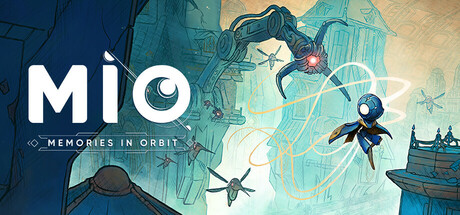
MIO: Memories in Orbit Is a Quiet, Beautiful Metroidvania About Memory and Loss
Some games shout for your attention. MIO: Memories in Orbit doesn’t. Instead, it invites you in quietly, asking you to explore at your own pace and piece together its story through movement, atmosphere, and small details.
Set aboard a drifting space station on the edge of collapse, the game blends classic Metroidvania design with a strong emotional core. It’s not just about where you’re going—it’s about what you slowly uncover along the way.
A Space Station That Tells Its Own Story
In MIO: Memories in Orbit, you play as MIO, a small android waking up in a place that feels abandoned, broken, and strangely personal. The station is massive, interconnected, and full of silent clues about what happened before you arrived.
The game avoids heavy exposition. Instead, it trusts players to read the environment. Flickering lights, damaged corridors, and forgotten machinery quietly hint at past events. Exploring doesn’t just unlock new areas—it deepens your understanding of the world.
Movement That Makes Exploration a Joy
From the very beginning, MIO: Memories in Orbit feels good to play. Movement is smooth and responsive, and that alone makes exploration enjoyable.
As you progress, new abilities change how you move through the station. Areas that once felt unreachable slowly open up, encouraging you to return and explore with fresh eyes. Backtracking never feels tedious because traversal itself is satisfying.
This is the kind of game where moving from place to place is just as rewarding as reaching the destination.
Letting Players Discover Things for Themselves
One of the game’s greatest strengths is how much it trusts the player. There are no constant markers telling you exactly where to go. Instead, MIO: Memories in Orbit encourages curiosity.
Hidden paths, optional areas, and subtle story moments reward players who take their time. The station gradually becomes more familiar, and every shortcut or newly discovered route adds to the sense of progress.
It’s exploration in its purest form—guided by curiosity rather than instructions.
Combat That Complements the Experience
Combat exists in MIO: Memories in Orbit, but it never overwhelms the game’s quieter moments. Encounters are thoughtfully placed, and success depends more on timing and positioning than button-mashing.
Boss fights are particularly memorable. They test both your understanding of movement and your ability to stay calm under pressure. When you fail, it feels fair—an invitation to learn, not a punishment.
Atmosphere Above All Else
What truly defines MIO: Memories in Orbit is its atmosphere. The hand-drawn visuals, soft lighting, and muted colors give the game a melancholic beauty that fits its themes perfectly.
Sound design plays a huge role too. Ambient noise, distant mechanical hums, and a subtle soundtrack work together to create a sense of isolation and reflection. It’s the kind of game that feels best experienced with headphones on, letting the world fully surround you.
Who Is This Game For?
MIO: Memories in Orbit is ideal for players who enjoy:
- Metroidvania games that focus on exploration
- Sci-fi settings with emotional depth
- Games that value atmosphere over constant action
- Slow, thoughtful progression
If you appreciate games like Hollow Knight or Ori, this one is likely to resonate with you.
Final Thoughts
MIO: Memories in Orbit doesn’t try to impress with spectacle. Instead, it leaves an impression through tone, movement, and quiet storytelling. It’s a game that respects your time, your curiosity, and your ability to connect the dots on your own.
For players looking for a thoughtful, atmospheric Metroidvania with a strong emotional core, MIO: Memories in Orbit is well worth paying attention to.